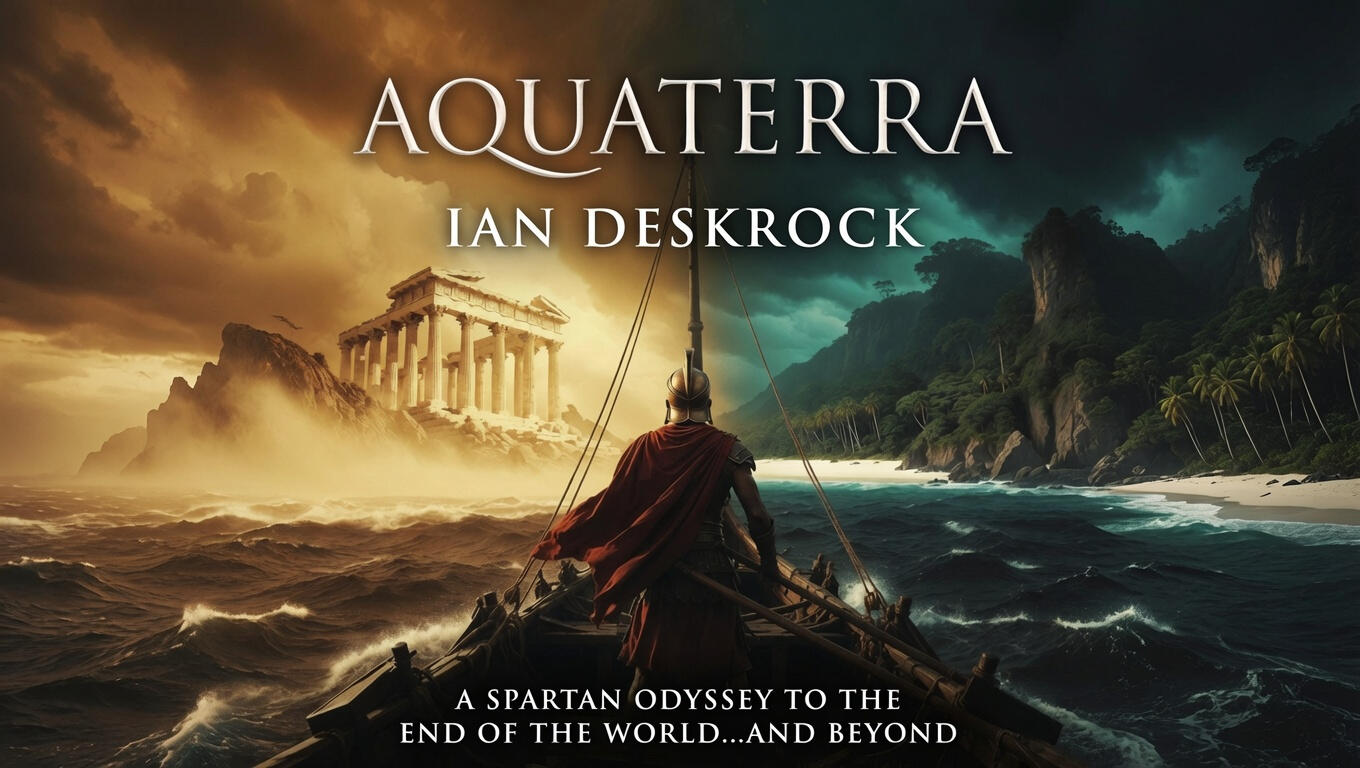
Lazaros survived Leuctra. He wished he hadn’t.Twenty years later, Sparta’s greatest hope rests on his shoulders. He must lead an expedition across the known world to find a new land before the old one collapses.Hunted by assassins. Haunted by prophecy. Betrayed by those closest to him. The ocean will test him. The new world will try to kill him. And the woman he loves will demand the one thing he never thought he had left to give.Hope.
A Few Things You Might Be Wondering About
If you don’t mind, I’d like to walk you through a few things that might have raised an eyebrow while reading.
Let’s start with the Spartan world itself.
The Spartans credited their entire way of life to a single legendary lawgiver named Lycurgus. Whether he was a real man or a convenient myth is still debated, but his name endured. He supposedly gave Sparta its three great pillars: equality among citizens, extreme austerity, and total dedication to military fitness. From these rules grew two institutions that defined Spartan life: the agoge and the syssitia.
The agoge was the brutal state-run training program that every Spartan boy entered at the age of seven. Under the direction of the paidonomos, they learned endurance, obedience, martial skill, and unbreakable loyalty. The syssitia were the common mess halls where up to twenty Spartiates ate together every day. The most famous dish was the infamous “Black Broth” — a thick stew of pork, vinegar, salt, and pig’s blood that even the Spartans admitted tasted terrible. It was fuel, not food.
When a child was born, it was carried before the elders of the Lesche. If the baby appeared weak or deformed, it was taken to the Apothetae — the “Place of Rejection” on the slopes of Mount Taygetus — and left to die. Only the strong were allowed to live.
Sparta was also unusual in having two kings at once, drawn from the Agiad and Eurypontid houses, both of whom claimed descent from Heracles. These kings shared power with the Gerousia (a council of twenty-eight men over sixty) and five Ephors elected annually to prevent any one person from growing too powerful.
Below the full citizens (the Spartiates) lived the Perioikoi (free but non-voting inhabitants of the surrounding towns), the Mothakes (poor or half-Spartan Spartans), the Trophimoi (foreign boys raised in the Spartan system), and — by far the largest group — the Helots, the state-owned serfs who worked the land and formed the economic backbone of Sparta.
The city of Sparta itself was never a single walled polis like Athens. It was a loose collection of five villages — the most important being the four along the Eurotas River plus Amyklai further south. The main road south to the port of Gytheion was called the Aphetes and ran roughly 230 stadia (about 40 kilometres).
Spartan men were instantly recognizable by their crimson cloaks, the tribon. In war they wore a linen cuirass (linothorax), helmet, shield (aspis), spear (dory), and short sword (xiphos). They were not the half-naked warriors Hollywood loves to show — they were heavily armed professionals.
As for the ships in our story, most of the fleet consisted of retrofitted kerkouroi — sturdy Greek merchant vessels that were modified to carry people, horses, and supplies on the long voyage.
As for the world outside of Laconia: many of the places Lazaros and Khan visited during their journey no longer exist in their ancient form. Naukratis and Heliopolis are now archaeological sites, as are Dascyleum and Cyzicus. Cities like Damascus, Ancyra (modern Ankara), Massalia (Marseille), and Syracuse, however, still thrive today. The underground cities of Cappadocia, where our travelers found shelter from the blizzard, can still be visited today.
I took one small liberty with Mainake, a real Greek colony founded under Tartessian protection on the Iberian coast. When Carthage conquered the region it was destroyed along with its protectors. In the story I preserved a small enclave as a quiet remembrance of the Tartessian people who once flourished there.
The islands west of the Pillars of Hercules are visited by humans for the first time in this story. The dreaded doldrums — those weeks of dead calm and stifling heat — are very real, even though they would not be properly understood or named for many centuries. The same goes for the breaching sperm whales the fleet encountered.
Finally, the Sambaqui people our travelers eventually meet are inspired by real prehistoric cultures that once thrived along the coast of what is now Brazil. These societies were famous for building massive shell mounds (sambaquis) that served as both villages and ceremonial centers. Some of these impressive mounds still exist today and continue to offer valuable insights into ancient South American coastal life.
I will admit something here: while every major idea and scene in this book came straight from my own imagination, I did use AI tools to help with research and ProWritingAid to polish the prose. Both made the process far easier and more enjoyable.
Thank you for reading. I genuinely hope the journey was entertaining.
Who knows — maybe one day we’ll set sail on another adventure together.
Ian Deskrock
How did this story come to be?
I've always been a fan of ancient history, growing up with tales of Heracles, Perikles, and the old gods. One night I couldn't fall asleep, and I let my mind wander: what if?But that felt too simple. I wanted to keep things plausible. That was the real "what if" for me — a Sparta that didn't just fade away, but sailed west.I sincerely hope you enjoy the result.
If you are interested in news and updates on a possible second book, I invite you to sign up for a sporadic newletter.
Privacy policy!
Datenschutzerklärung: Zweck der Datenverarbeitung:
Ich sammle Ihren Namen und Ihre E-Mail-Adresse, um Ihnen meinen Newsletter mit Informationen über neue Bücher, Leseproben und Aktionen zuzusenden.Rechtsgrundlage:
Ihre Einwilligung (Art. 6 Abs. 1 lit. a DSGVO), die Sie durch Anklicken der Checkbox im Anmeldeformular erteilen.Speicherdauer:
Ihre Daten werden gelöscht, sobald Sie Ihren Newsletter abbestellen.Ihre Rechte:
Sie haben jederzeit das Recht auf Auskunft, Berichtigung, Löschung, Einschränkung der Verarbeitung sowie auf Datenübertragbarkeit. Bei Fragen kontaktieren Sie mich unter [email protected].Widerruf:
Sie können Ihre Einwilligung jederzeit widerrufen, z. B. über den Abmeldelink im Newsletter oder per E-Mail an [email protected].Beschwerderecht:
Sie haben das Recht, sich bei einer Datenschutz-Aufsichtsbehörde zu beschweren (z. B. der Österreichischen Datenschutzbehörde).
Impressum: Deskrockbooks
c/o Engelbert Bäck, Kaplitzstr23, 4020 Linz
Kontakt: [email protected]
© deskrockbooks 2026